As previous posts on this blogspot have shown, I like nothing better than delving into records. In my first job as a junior civil service clerk in the old Ministry of Transport. I was fascinated by the files going back to the setting up the regional roads office and delighted in burrowing into the old correspondence - something I might go into on another occasion. One can imagine what a boon the Internet and search engines from Lynx through to Google turned out to be.
The World Wide Web also introduced me to the Internet Movie Database (IMDb), now owned by Amazon, but founded and still managed by a Brit. Just occasionally, the excellent Independent obituaries (which sadly did not survive the cull when the paper went online only) provided snippets about screen actors which were not already recorded on the IMDb so I became one of the many contributors to IMDb. I also signed up to the Oxford Dictionary of National Biography's (ODNB) daily extract from its extensive archive.
It was an ODNB update which started me on the Sarett Rudley hare. Felicity Anne Cumming (I link to the Indy's obit since the ODNB is a subscription service, albeit a free one) was an adventuress who, it was noted, was first married to Richard Mason. He wrote three romantic novels on which successful films were based, The World of Suzie Wong being the one that provided him with a pension for life. The IMDb has no references to Mason marriages. but I recalled an Indy obit and managed to find it from a back issue (it is no longer accessible online). The obituarist Jack Adrian (probably a fellow-author, Chris Lowder, using one of his pseudonyms - just the first in this saga!) recorded that Mason was married three times but tantalisingly gives no names. When all else fails, try Wikipedia - and, sure enough, there is an entry for Mason which lists Cumming as his first wife, Margot (Maggie) Wolf as his widow and mother of his two children and, in between, Sarett Rudley, with whom he went "to raise sheep on an estate in Wales".
The description of Ms Rudley as a writer of television teleplays for Alfred Hitchcock Presents was intriguing (we are now two degrees of separation from Anne Cumming). There are no biographical details for her on IMDb. She suddenly appears as a screenwriter in 1956, adapting other people's original material, until 1959 when she signs off with an original screenplay - perhaps a leaving gift from the Hitchcock production team? That would fit with a departure for Britain in the late '50s, especially as she also has a 1958 credit for a contribution to ABC's Armchair Theatre. In 1968, she contributed to Journey to the Unknown, described on IMDb as an English series, shot by MGM in the US company's Borehamwood studios, but featuring American actors in the leading parts. A 1989 credit proved to be misleading, because it was a remake of an earlier Hitchock episode. So Sarett Rudley effectively disappeared after 1968.
She almost came from nowhere - but not quite. In 1949, a well-meaning but unfortunately untheatrical "colour problem" play was put on in Brooklyn. How Long Till Summer ran for just seven performances. The authors were Sarett and Herbert Rudley. Herbert Rudley had a long career on stage starting in 1926 and became a stalwart character actor on screen until 1983. He had no other writing credits of any kind that I can discover, so presumably the play was virtually all Sarett's work. Herbert Rudley was actually born Herbert Shapiro and adopted his mother's maiden name as his own fairly early in his stage career. (Obviously Jewish names were out in those times. For instance, Emanuel Goldenberg changed his name to Edward G Robinson. English and French surnames were OK, other continental European monickers a bit dicey.)
It turns out that a Sarette (sic) Tobias became Rudley's mistress in Hollywood while he was still married to Ann Loring, causing an interesting court case. IMDb lists Sarett Tobias as a screenwriter with two credits to her name in 1945 and '46.
A bit more digging turned up a 1948 marriage between Rudley and Tobias, which had not been listed on IMDb previously. That led to a date and place of birth: 26th September 1917 in Colorado Springs, which ties in with a US census return of 1940 showing a Sarett Tobias, the wife of a medical doctor in Los Angeles.
From the time her earlier surname appeared, a faint bell rang. Was there not a leading character named Tobias in a major film? Eventually it came to me: Sarah Tobias was the victim in The Accused, written by veteran journalist turned screenwriter Tom Topor. Pure coincidence, or had the author met the former Sarett Tobias?
So I have clearly identified the second wife of Richard Mason with the (bored?) young housewife and mother in Los Angeles who took to writing screenplays. But where did she come from? Here is where it gets murkier. There is no Sarett listed among the Colorado births, but there is a Sarah Rude of the right birthdate. She takes a couple of journeys by sea (as shown in passenger lists) with her mother, travelling under her maiden name of Teichman, then nothing. This is almost certainly the same person, but I cannot make the Milton Tobias connection.
And what became of Sarett Mason? Presumably she returned to the States - or did she go to Italy? Jack Adrian reported that Richard Mason remained on good terms with both his first two wives. There is more to discover there.
Monday, 8 October 2018


Saturday, 6 October 2018
Fake bogeys
I enjoyed Al Murray's not-too-solemn history of Germany. Together with Misha Glenny's take on the subject for Radio 4, it made me realise how little I had really absorbed in sixth-form German lessons.
Murray is a descendant of William Makepeace Thackeray and a history graduate, so he is well equipped to front a programme on the History Channel attempting to answer the question: "Why does everyone hate the English?". In his preview in the Radio Times, he poses another question, more pertinent to the current mood in England and Wales: why have British newspapers and the Tories not moved on from the 1939-45 war? He writes of a visit to Hamburg during the making of his series.
Germany, which tipped the world into war, its leader in pursuit of his own racial bogeymen, has a lot to teach us. And in Germany it's taken time and effort to process this history. In the history museum in Hamburg, the story of the wartime firebombing is told dispassionately. The city was destroyed over a few days and nights by Allied "area bombing", a firestorm raging in residential areas. Tens of thousands of people were killed.
You might think this would be a reason to hate the English. Instead, the tone was one of "you reap what you sow". Rather than shaking their fists at the English the way we might at the Germans, what was on offer was a sober assessment of how it had happened. And part of that display? A bust of Hitler, presented not as a bogeyman, but as a warning.
After all, what he did was to gather every grievance, ancient and modern, real and confected, serious and glib, heartfelt and unjust, bundled them all together and pile them onto a bogeyman himself. Warning enough.
Friday, 5 October 2018
Calorie-counting goes back a long way
It seems to me that calorie-counting among slimmers goes in and out of fashion. A younger correspondent seems to believe that it is a new technique, yet I remember it being an obsession, in the media at least, in the 1950s. It was, though, a considerable surprise to find that it entered the popular consciousness 100 years ago.
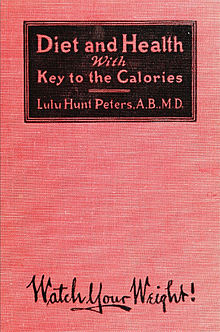 Find out more here.
Thursday, 4 October 2018
Syria: Jeremy Bowen misses part of the jigsaw puzzle
Jeremy Bowen, the BBC's Middle East editor, previews his series on the House of Assad in next week's Radio Times. He draws out the contrast between the civilised veneer of the Syrian first family and the ruthless suppression of dissent in the country. He sketches all the key players except, it seems to me, the main driver of the brutality. The Independent obituary of February 2016 reports:
The daughter of a wealthy Alawite Shia family from Lakania province in Syria, Aniseh Makhlouf became the matriarch, behind the scenes, of the country's ruling Assad family. She was rarely seen in public after Assad's father, Hafez al-Assad, became Syrian president in 1971, but even beyond his death in 2000 she was acknowledged still to be a powerful influence on Syria's government. She is said to have urged her son, President Bashar al-Assad, to crack down on opponents in 2011 as Syria's civil war erupted. It is believed she called for a still more heavy-handed response than the strong measures he already favoured, and she was thought to have remained one of the few people whose advice he continued to seek when the war intensified. Her hold over her son already included a fierce outburst of disapproval over Syria's withdrawal in 2005 from what had been 29 years of occupation of neighbouring Lebanon. She is said to have upbraided him at the time: “You violated your father's statement that Lebanon and Syria both belong to the Assad family.”
That apart, this looks to be a high-quality documentary series by Bowen, who, presumably because of Netanyahu's disapproval, we see and hear too little of on BBC News.
Wednesday, 3 October 2018
Just get on with it
So the new leader of the Conservatives in Wales believes that because the Labour party is about to change their leader, they should immediately thereafter move for a Welsh general election. This bit of grandstanding for the Tory rally in Birmingham neglects the fact that more than a simple majority is required in order to dissolve the Senedd. Besides, with such a precarious balance in Cardiff Bay, Carwyn Jones' successor has to convince more than just his Labour colleagues that he should be First Minister. Mr Davies should be directing his efforts there if he is not happy with Labour's choice.
If Paul Davies follows his own logic, all the Conservative FPTP AMs should have resigned and caused by-elections because his party has elected a new leader. Why do these people not get it through their heads that we have representative democracy, not a presidential system? It is especially true of Scotland and Wales where proportionality means that the Assembly more genuinely represents the people year on year than Westminster does.
I am afraid that my own party has not been above such posturing in the past. There was a call for a general election when Gordon Brown replaced Tony Blair as Labour leader and therefore prime minister, even though it was clear that New Labour policy was not about to change. The only time when a new general election could justifiably be demanded is when the mass of MPs openly reverse their views on a substantial plank of their original manifesto or a referendum appears to show that the electorate has reversed its own ideas. There was such an occasion in June 2016 - and we did not have a general election then.
The normal voter, as opposed to the political activist, chooses his or her representative to serve for a full term and then expects them to just get on with it. The normal voter should be respected.
Tuesday, 2 October 2018
Neath Abbey Ironworks open day
Vic James and company have revived the Friends of Neath Abbey Ironworks Company, and I have altered the link on the emblem to the right to point to their Facebook page. My own pages still exist and I hope to add to them as I have more time.
This weekend just finished saw a repeat of last year's successful open days. The Friends have done a remarkable job in clearing the site, aided by the National Lottery and an EU grant via the county borough. Pictured below is Bill Zajac, who I see from his Cadw c.v. specialises in mediaeval castles and warfare, delivering an enlightening, authoritative talk from the mouth of a monument to the industrial revolution, blast furnace no. 2 of the former Neath Abbey ironworks.

This weekend just finished saw a repeat of last year's successful open days. The Friends have done a remarkable job in clearing the site, aided by the National Lottery and an EU grant via the county borough. Pictured below is Bill Zajac, who I see from his Cadw c.v. specialises in mediaeval castles and warfare, delivering an enlightening, authoritative talk from the mouth of a monument to the industrial revolution, blast furnace no. 2 of the former Neath Abbey ironworks.

Monday, 1 October 2018
Project Reality
I have just caught up with a discussion about what happens if there is a "clean break" between the UK and the other 27 EU members. The YouTube links are https://www.youtube.com/watch?v=1Axm7ErLuw0 , https://www.youtube.com/watch?v=OtkP3Hkc1cM and https://www.youtube.com/watch?v=ZmUJzXYiku8 The series distils much of what has gone before in the Three Blokes in the Pub series and in the last podcast draws on experience from business people in the audience, too.
We are now starting to see the practical effects on businesses exporting to mainland Europe. Goods and services which take time to prepare and whose delivery dates fall after the withdrawal date in March next year cannot be provided by UK suppliers.
The Conservative party's Brexit pitch from Birmingham was on BBC-Parliament this morning. One speaker was honest enough to admit that around 300,000 UK businesses trade with the rest of the EU and that they would be seriously affected by Brexit, probably put out of business altogether by a no-deal withdrawal. (In another place, John Redwood MP has suggested that they should start running their businesses down now.) However, the man went on, these are a minority of businesses in the country, we do most trade internally and we have a vibrant hospitality sector. Having thrown exporters and their employees out of work, that puts a heck of a burden on tourism to provide income for our hotels, B&Bs and brewers, even allowing for a continuing fall in the value of sterling.
Thought for the day
From October 1st 2013:
A strong nation, like a strong person, can afford to be gentle, firm, thoughtful, and restrained. It can afford to extend a helping hand to others. It is a weak nation, like a weak person, that must behave with bluster and boasting and rashness and other signs of insecurity.
Jimmy Carter, 39th US President, Nobel laureate (b. 1924)
Subscribe to:
Posts (Atom)