Monday, 31 July 2017

Some of the reasons I like Morrisons

They still stock regional British cheeses when Tesco have given them up and they are only an occasional item in Lidl.


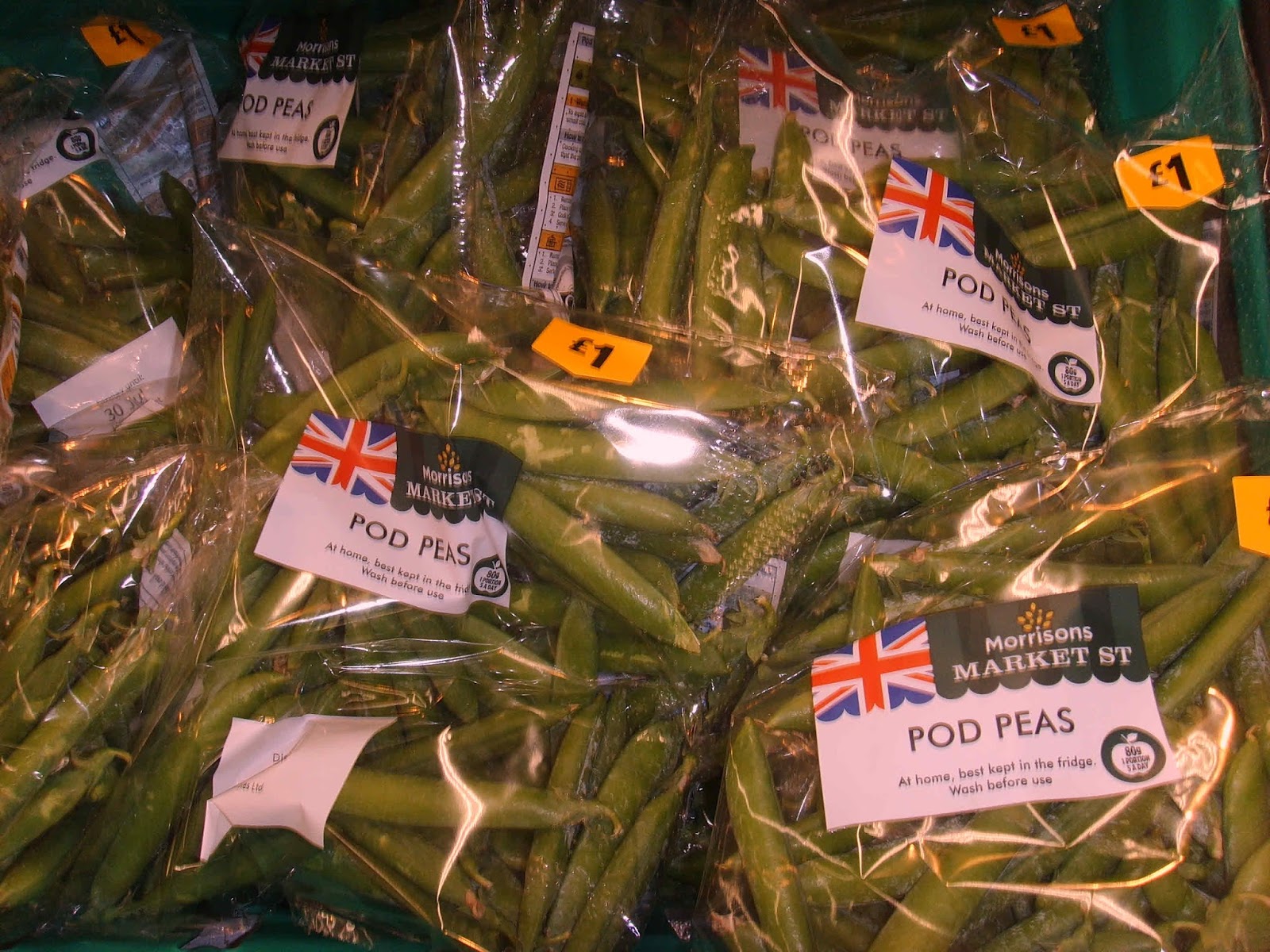
 - and they now sell peas and beans in pods, useful if you do not have a freezer:


though because they are so young, they do not give that satisfying "pop" when you open them.

Moreover, Morrisons now sell 4 pints of  semi-skimmed milk for £1. Why should one pay full price for milk with part of the goodness taken out?


Sunday, 30 July 2017

Black chair in Birkenhead

On the eve of the anniversary of Passchendaele, there was a fascinating piece on this morning's Sunday Supplement about the Eisteddfod in Birkenhead which followed. Hedd Wyn, the winning bard, having died in the battle, the chair which would have been awarded to him was empty and draped in black. It seems that the pressure to hold the Eisteddfod at all, and on Merseyside (then having more Welsh-speakers than Cardiff!) in particular came from prime minister David Lloyd George, who used it to support the war effort.

The tragedy of Hedd Wyn is told in a moving film.


Saturday, 29 July 2017

Democracy in the EU

A post from the European Parliament members' research service bears out two of the points I have consistently said about our participation in the democratic process of the EU: the power of the Parliament has increased since our entry, and the electorate have not been well served by the people who should have been keeping us informed.

Generally, Union citizens do not seem to exercise their electoral rights as actively as they could. Regarding European Parliament elections, for example, overall turnout is low compared to national parliament elections, and has steadily declined since the first direct elections in 1979. This is despite the fact that the Parliament’s role has increased significantly over that period. According to Eurostat, in the 2014 European elections, turnout for the 28 Member States was 42.5 %, compared to an average 68 % in national elections. Nonetheless, turnout rates in European elections vary greatly among Member States: in 2014, from 13 % in Slovakia to 89.6 % in Belgium (where voting is compulsory). According to a Eurobarometer survey on Electoral Rights 2015, most people think turnout would be higher if more information were provided on the elections, the impact of the EU on citizens’ daily lives, and the programmes and objectives of candidates.


Friday, 28 July 2017

Police: back-office cuts hurt, too

A report published ten days ago by the HMICFRS (but commissioned when it was still just Her Majesty's Inspectorate of Constabulary) jointly with the Inspectorate of Crown Prosecution Services found serious failings in the operation of disclosure by police forces. As the preamble points out:

Disclosure of unused material is a key component of the investigative and prosecution process. When conducting investigations, the police have to retain every unused item which is considered relevant to an investigation. Each item is then reviewed to see whether it is capable of undermining the prosecution or assisting the defence case. If either factor applies it must be disclosed to the defence.

If this process is not done correctly and in a timely fashion, it may result in cases being discontinued or the trial process being delayed through unnecessary adjournments thereby incurring extra cost for the justice system and causing additional emotional distress to victims, witnesses and defendants. Ultimately, the failure to properly disclose material can lead to miscarriages of justice. The Criminal Cases Review Commission tells us that disclosure failures are the basis for a significant number of cases it considers.


A notorious failure was that of the breakdown of a case against the officers whose conduct led to the false imprisonment of the Cardiff Three. It is probably not a coincidence that a QC's report of his investigation into the collapse of the Mouncher trial was published on the same day.

Richard Horwell QC rules out deliberate mislaying of evidence in Mouncher, but it seems to me that cutting back-office functions to the bone offers great opportunities to those with malign intent. Malign or not, justice is not served by sloppy work by hard-pressed, over-worked and/or poorly trained staff, which must be the result of cutting financial support to police forces.

Thursday, 27 July 2017

Against the Law

Even before 1954, there had been court cases involving sexual activity on the part of mutually consenting males ("acts of gross indecency") warranting a paragraph or two in the News of the World. Sometimes prominent figures, like the actor John Gielgud, were involved but were deemed to merit no more than a straight report.

Perhaps it was the involvement of a peer of the realm, coupled with the fact that one of those involved was himself a rising journalist, that brought the full front-page treatment to the Beaulieu affair. The reports three years earlier of the defection of Burgess and Maclean, in which homosexuality was a factor, may also have propelled same-sex relationships to the top of the press's agenda. Peter Wildeblood's 1955 book "Against the Law" gave an account of the affair and his fairly objective reporting elicited a great deal of public sympathy. Something had to give, and the Wolfenden inquiry was set up. It reported in 1957.

From there, Antony Grey's Quest for Justice: Towards Homosexual Emancipation takes up the story. He explains how two parliamentarians, Leo Abse, Labour MP for Pontypool, and Earl "Boofy" Arran, a hereditary peer, stirred a reluctant legislature into action. Lord Arran was already a controversial columnist in the London Evening Standard and well-known as a campaigner for protection for badgers, so when he led the way with his private Sexual Offences Bill in the Lords in 1965 it attracted some attention.

 It is worth at least skimming through the whole proceedings of the Second Reading debate if only to marvel at the unintentional humour of some of the opposition's remarks. It was also remarkable for the overwhelming expression of support in what was regarded as by far the more conservative of the two Houses of Parliament. As Lord (Frank) Byers pointed out, it also had the support of the broadsheet papers and the Daily Mirror - and of course the Liberal Council.

I did not attend that debate but was in the Strangers' Gallery for the closing moments of the earlier "motion for papers" (practically a sounding-out). I could have sworn that a noble lord asserted with great authority that this sort of thing did not go on in Scotland, though this is not recorded in the archive. Innocent as I was in those days, even I recognised that some of the artistic "goings-on" north of the border were at least camp. I was certainly there for Lord Arran's closing remarks, though he found it difficult to get started, close as he was to tears:

My Lords, I will not attempt to summarise this great debate. Too many good things have been said by too many good people to pick and choose. I will simply say that I have been surprised and delighted by the virtual unanimity of opinion in this debate on the need to implement the main recommendations of the Wolfenden 171 Committee on homosexuality. Lest noble Lords who spoke against should think I am disregarding them, I can say I am not. A former Chief Scout and a Commissioner of the General Assembly of the Church of Scotland are major personages; but, as has been pointed out, out of 22 speakers I think 17 or even 18, have been broadly—and some of them very strongly—in favour. They have included four of the Lords Spiritual and other names which are noted and respected throughout the country.

The Sexual Offences Act eventually gained Royal Assent on this day fifty years ago. The wikipedia entry and an Independent piece on the thirtieth anniversary regret that not all the oppressive hangover from Victorian times has been removed.


Gay edifices: should Wales follow Historic England?

The process of listing buildings of LGBT significance begun by Historic England last year has been given a boost by the celebrations surrounding the 50th anniversary of the Sexual Offences Act which removed many of the Victorian restrictions on male same-sex relationships.

Those celebrations have rather obscured the memory of Wales' famous same-sex couple (in their time, internationally so) the Ladies of Llangollen. Their home is now a museum and presumably secure in local government ownership, but it would be a nice gesture to formally give it at least a Grade II listing.


Wednesday, 26 July 2017

Discriminatory casting

The fine actor (and it transpired, renaissance man) Paterson Joseph revealed on Radio 3's Private Passions last Sunday that racist attitudes by casting directors are still a hurdle for dark-skinned actors to overcome. (Thankfully we are not as bad as American theatre people, if this extraordinary report is typical. The point is that no part in a play set in academia in modern times should be defined by skin colour.) He expressed his gratitude to radio for giving him the opportunity to play a wider range of parts than would be available to him on the stage - an opportunity which has also been seized by Ben Onwukwe and Adjoa Andoh with distinction.

Cush Jumbo has also raised the question of discrimination against non-white actors on UK TV. In her case, though, I would suggest that the problem is the lack of good parts as such. The fact is that more good TV drama series are being made in the US now than in the UK. UK broadcasters seem unwilling to break out of the safe template of the police procedural. Good though some of these series are, few of the parts on offer are rewarding - Cush Jumbo's part behind a desk in Vera is a case in point, though one in which her very light brown complexion quickly became irrelevant, at least to this viewer.

The Good Wife gave not only Cush Jumbo and Archie Panjabi good parts, but also "white" British actors Alan Cumming, Marc Warren and Matthew Goode. US directors appreciate the technical ability and professionalism of British-trained actors. A list of US TV series which feature Brits - or Australians, Canadians or New Zealanders - would make this post far too long, but I would pick out another ground-breaking series which no BBC executive would dare to green-light these days: The Americans, featuring Taff Matthew Rhys.

Christopher Eccleston has consistently drawn attention to a more worrying aspect of UK casting: discrimination against working-class actors. His most recent attack came in the i newspaper of 17th July, but there is a more accessible and comprehensive article in the Guardian from two years ago. Eccleston's generation is the beneficiary of a breakthrough which began in the 1960s with the likes of Albert Finney, Tom Courtenay and Michael Caine, but which seems to be the last of the line. We are reverting to the situation of the 1950s and earlier when only well-off boys and gels could afford the necessary training and had the contacts, so came to dominate English stage and screen. One wonders how audiences put up with excruciating attempts at working-class accents for so long, something at least the current crop of privately-educated young actors have worked at. One hopes that we are currently going through no more than a phase, and that a proper balance will be restored, but the signs are not good.


Tuesday, 25 July 2017

Abuse of candidates

I have recently received and returned a questionnaire about my experience as a candidate in the last election. A significant part of the study concentrates on what level of abuse candidates had experienced during the campaign. I was pleased to report that I was not aware of any, though perhaps I was not seen as high-profile in a very polarised campaign. A chance remark from the Conservative (female) candidate after the count suggested that this was not the case with the front-runners and Labour's Christina Rees has certainly attracted some nasty comments on social media even before the election.

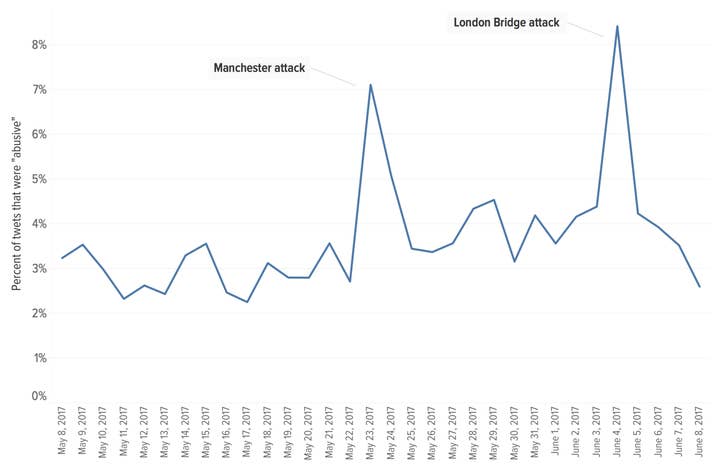
Another way of avoiding anonymous abuse is not to use Twitter, which seems to encourage such garbage by its very nature. Sheffield University and Buzzfeed have recently completed an exhaustive analysis of tweets received by politicians over the month leading up to the 2017 general election. (Thanks to Guido Fawkes for publicising this.) The reassuring thing is that even in the worst case (Conservative men), less than 6% of Twitter traffic was abusive, and in the case of female Greens and Liberal Democrats, less than 1%. This is still too much, though, especially as some of the language used is obnoxious, and the government is right to hold an inquiry.

Another finding is that race is clearly a motivator:


It is well worth reading the whole article and its other well-chosen graphs.